Greenhouse robots are moving toward jobs that still depend on slow, repeated human work: checking plants, carrying trays, removing leaves, and picking fruit. Their value comes from working in a fixed growing space, where cameras, rails, and maps can guide each task.
For growers, the question is practical: can a robot complete enough work, safely enough, to justify its price and upkeep?
Quick read
- Greenhouses give robots a more controlled space than open fields.
- Cameras can check plant rows, but picking ripe fruit remains difficult.
- A useful system must fit existing paths, workers, crops, and packing routines.
Why the greenhouse suits robots
A greenhouse has walls, marked rows, known entry points, and repeatable routes. Those conditions help a mobile robot build a map and move between plant beds without handling the changing ground found on a farm field.
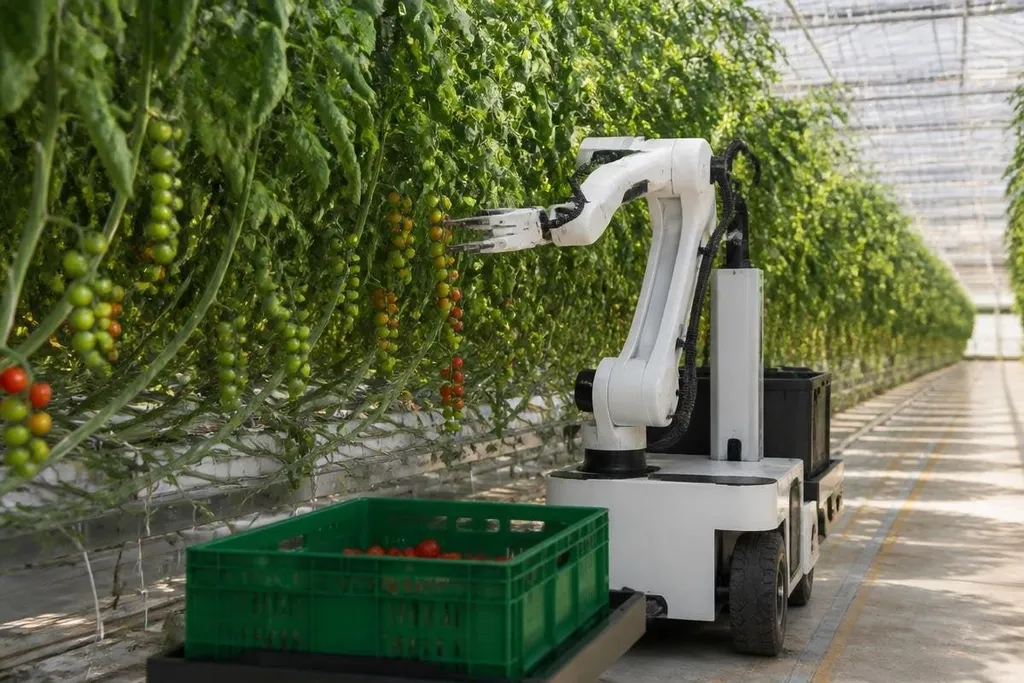
The robot may use cameras, LiDAR, or both. A camera reads color and shape. LiDAR measures distance with light pulses, helping the robot detect posts, carts, workers, and plant rows. The system still needs software that can tell a ripe tomato from a leaf partly hiding it.
This setting also lets a robot focus on one crop and one task. A machine built for strawberry rows can carry a gripper sized for that fruit, rather than trying to handle every crop on the site.
The work robots can take on
Greenhouse work contains many jobs that repeat across a row. Some need careful contact with a plant; others only need a camera and a route plan. That difference affects the cost and the chance of success.
A robot could inspect plants for color changes, count fruit, move trays, or carry picked produce to a packing point.
A gripper may cut stems, remove leaves, or pick fruit when the system can find the target without pressing nearby plants.
Inspection is often easier than picking. A camera can record an image from a set distance, then send it to software for review. Picking needs the robot to find the fruit, choose a safe grip, reach around leaves, and place the fruit without bruising it.
A greenhouse buyer has to judge the task, crop, and human work left after each run. Greenhouse robotics reporting can tie those details to the robot’s test conditions and measured result, which sets up the question of why growers need these systems at all.
Why the need is growing
Greenhouse operators need steady output across each growing cycle. Repeated manual work can also take people away from tasks that need judgment, such as crop care, machine checks, and handling problems in the growing area.
The system can return to a mapped row, repeat a measured motion, and record what it sees. Those records may help a grower find damaged plants or missed fruit earlier than a later manual check, but the value depends on useful data and a clear response from staff.
The machine also has to work around people. A greenhouse includes narrow paths, wet floors, hanging plants, carts, hoses, and workers carrying loads. A safe system needs an emergency stop, speed limits near people, and a way to stop when its view is blocked.
What still makes deployment hard
Plants do not hold the same shape all day. Leaves move, fruit hides behind stems, and light changes under glass or plastic. A robot trained on one row may need new settings for another variety or growth stage.
Maintenance adds another cost. Cameras need cleaning, grippers wear, wheels collect soil, and a stopped robot can block a narrow path. The grower must also plan charging, software updates, spare parts, and staff training.
The price question has no useful answer without the task. A robot that moves trays can be judged by trips per shift and operator time saved. A picking robot needs measures for fruit damage, missed fruit, picking speed, and the hours it runs without help.
I’d wait for task-level proof before buying any greenhouse robot: a smooth demonstration is not enough evidence for a full growing season.
A practical buying checklist
Use these checks before a pilot or purchase:
- Name the task: write down the exact motion, crop, route, and handoff the robot must complete.
- Measure the result: set targets for units moved, fruit picked, damage, stops, and staff time.
- Map the space: check aisle width, floor changes, lighting, plant height, carts, hoses, and safety exits.
- Plan the handoff: decide who loads trays, clears faults, charges the robot, and checks its records.
- Price the full system: include the robot, gripper, software, service, spare parts, training, and downtime.
- Run a long test: compare results across different crop stages and working conditions.
Greenhouse robots matter more when they remove a defined task without adding a larger repair and supervision job. The next useful proof is not a longer video; it is a crop-season record showing output, damage, stops, and total cost.